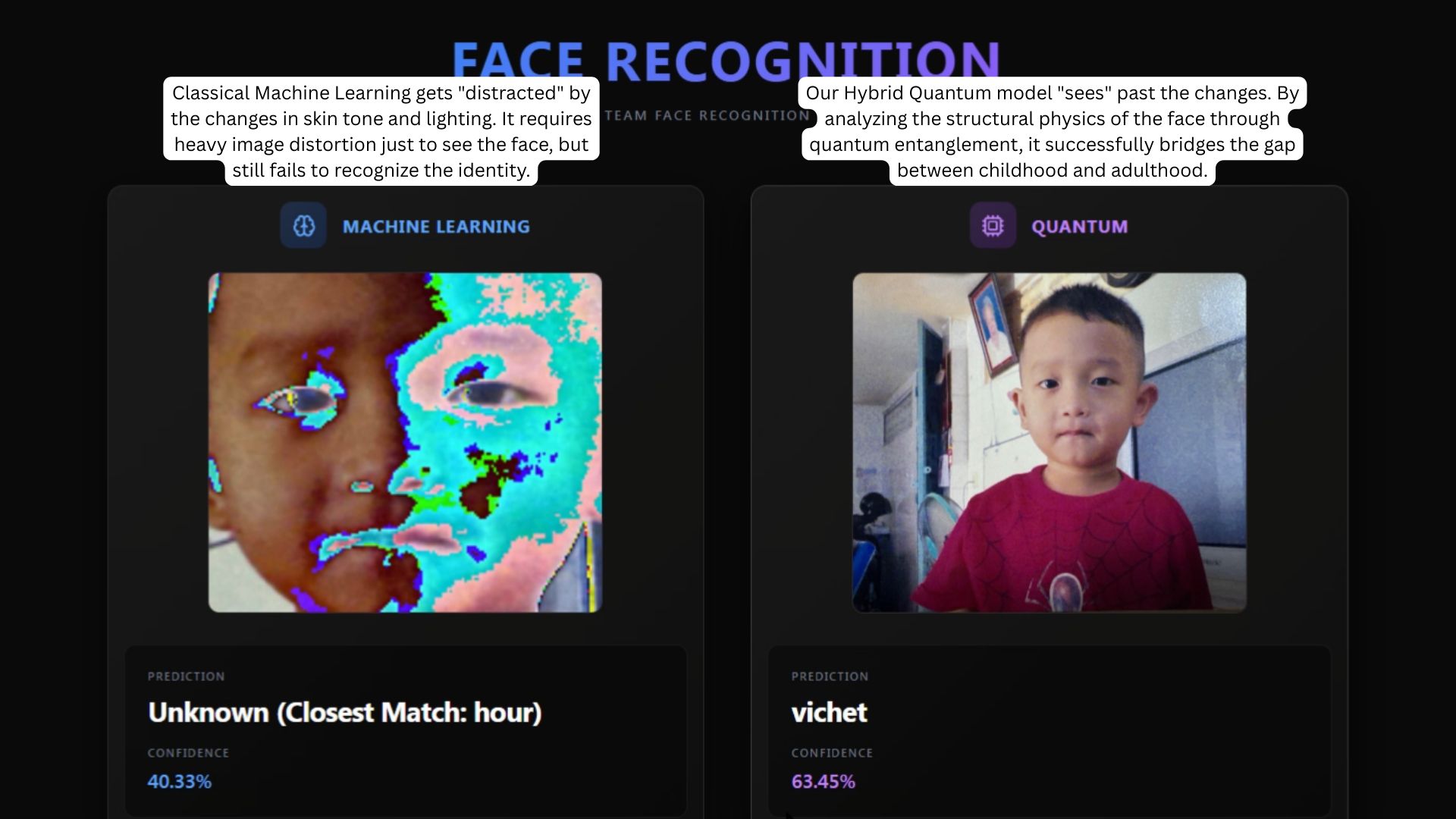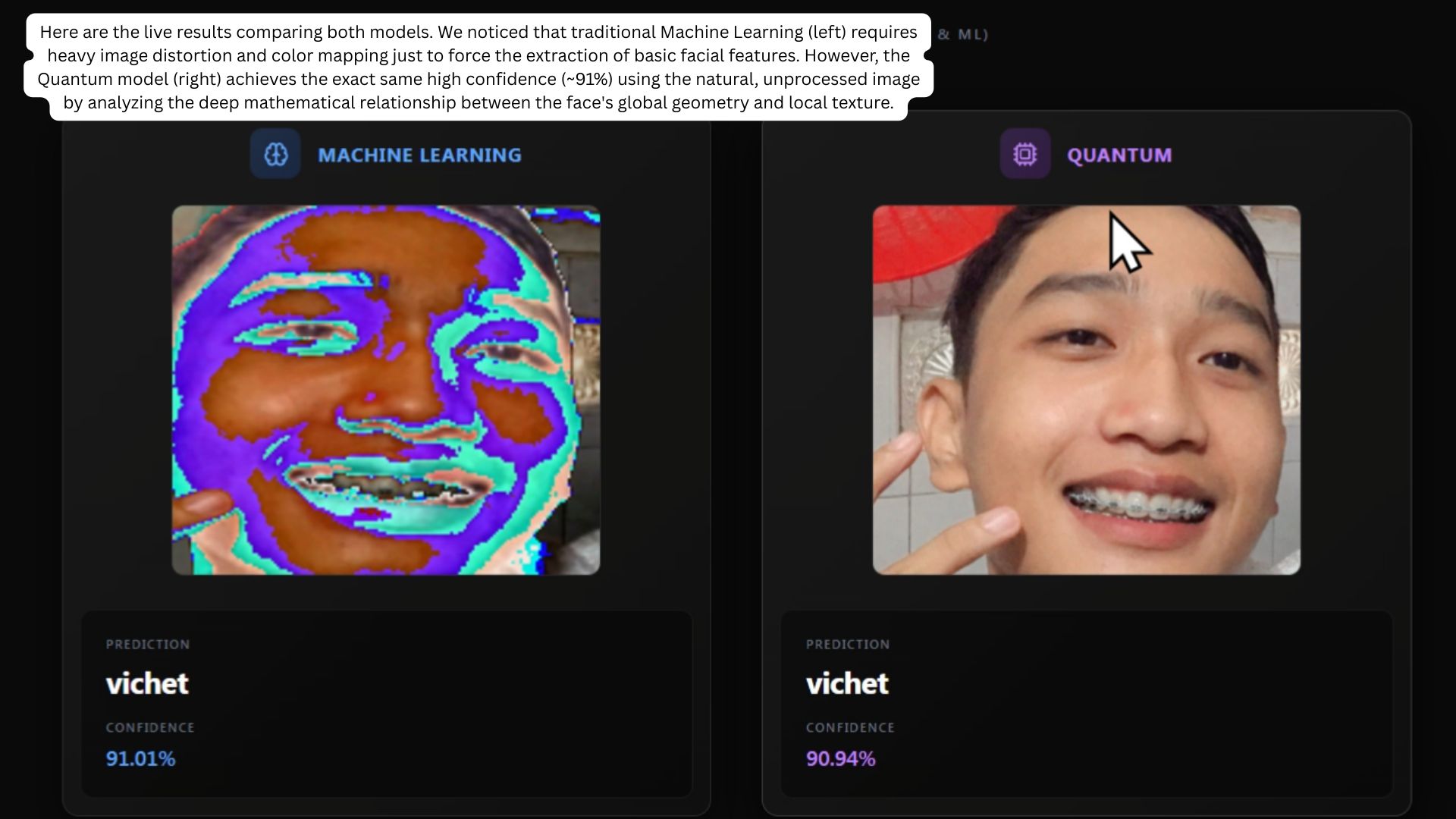
AI-generated imagery from tools like Midjourney and Stable Diffusion has progressed to the point where synthetic faces are nearly indistinguishable from real ones. While classical machine learning models, such as ResNet or FaceNet, are highly efficient at facial recognition, they remain vulnerable to being fooled by these hyper-realistic deepfakes. To address this security risk, a research team developed a hybrid quantum-classical face recognition prototype that analyzes the underlying relationship between different facial features using quantum-enhanced feature spaces.
The Dual-Stream Compression and Angle Encoding
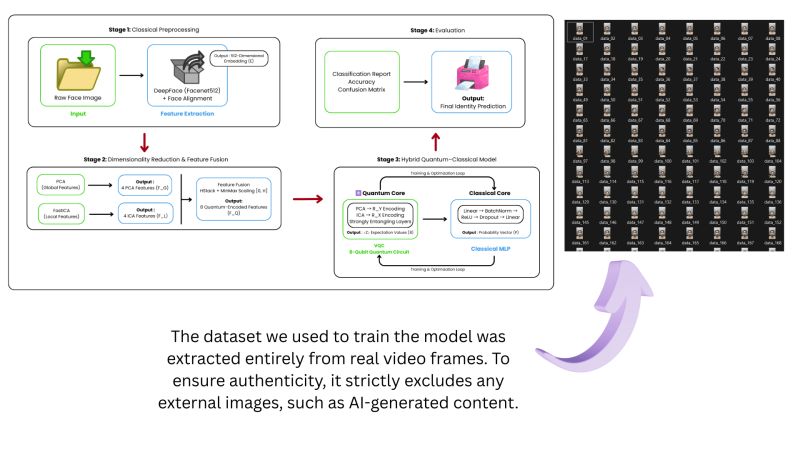
The proposed architecture, implemented using PyTorch and the PennyLane quantum simulation library, begins with classical feature extraction. High-dimensional FaceNet512 embeddings are compressed into an eight-dimensional space. To capture both macro and micro structures, four dimensions are reserved for global facial geometry obtained via Principal Component Analysis (PCA), and another four dimensions capture local micro-textures via Independent Component Analysis (ICA). These classical features are then mapped onto the physical phases of eight qubits on the Bloch Sphere using Rx and Ry angle encoding rotation gates.
Quantum Entanglement as a Deepfake Detector
The core of the detection mechanism lies in quantum entanglement. By utilizing strongly entangling layers, the Quantum Neural Network (QNN) mathematically binds the qubits representing global bone structure with those representing microscopic skin textures. Because AI-generated faces are created by a generative denoising process rather than biological growth, their global geometry and local textures lack independent physical coherence. Empirically, when the system attempts to entangle these synthetic features, the quantum state collapses inconsistently, allowing the model to flag the input as anomalous or low-confidence.