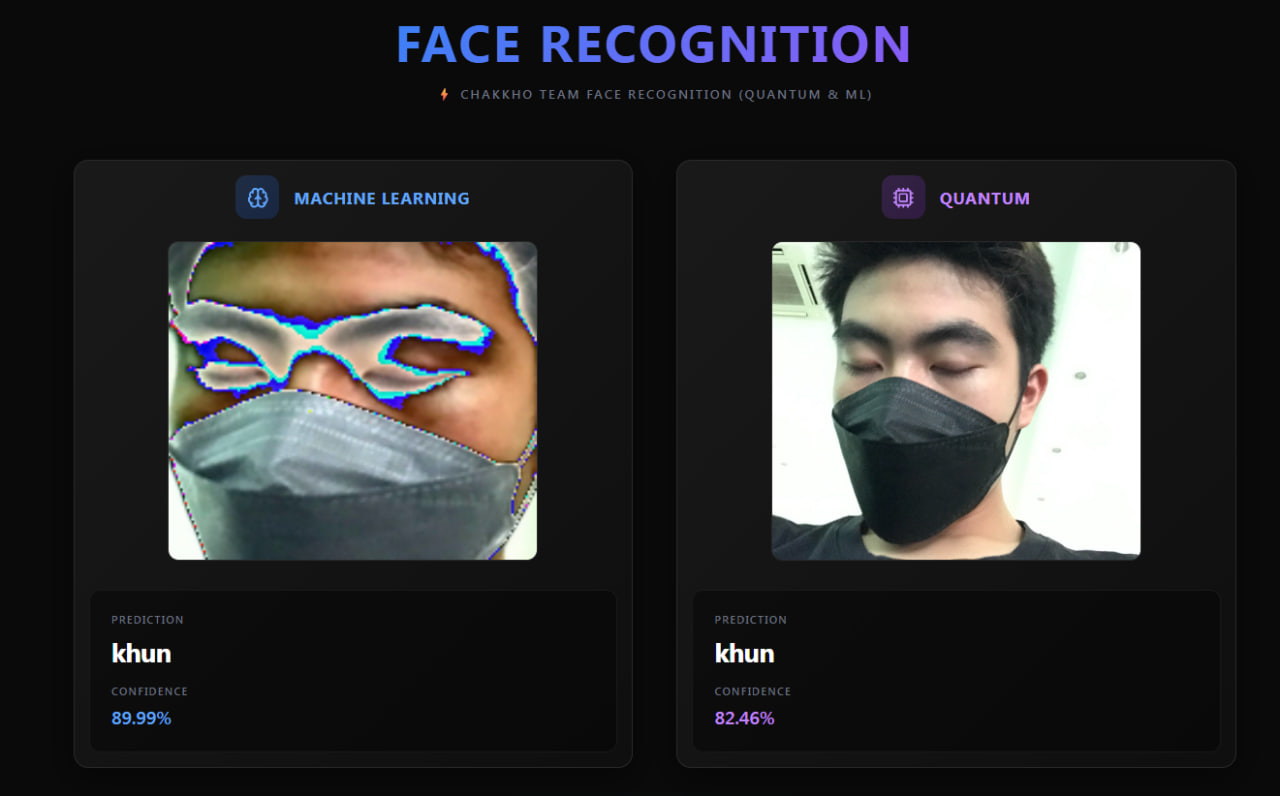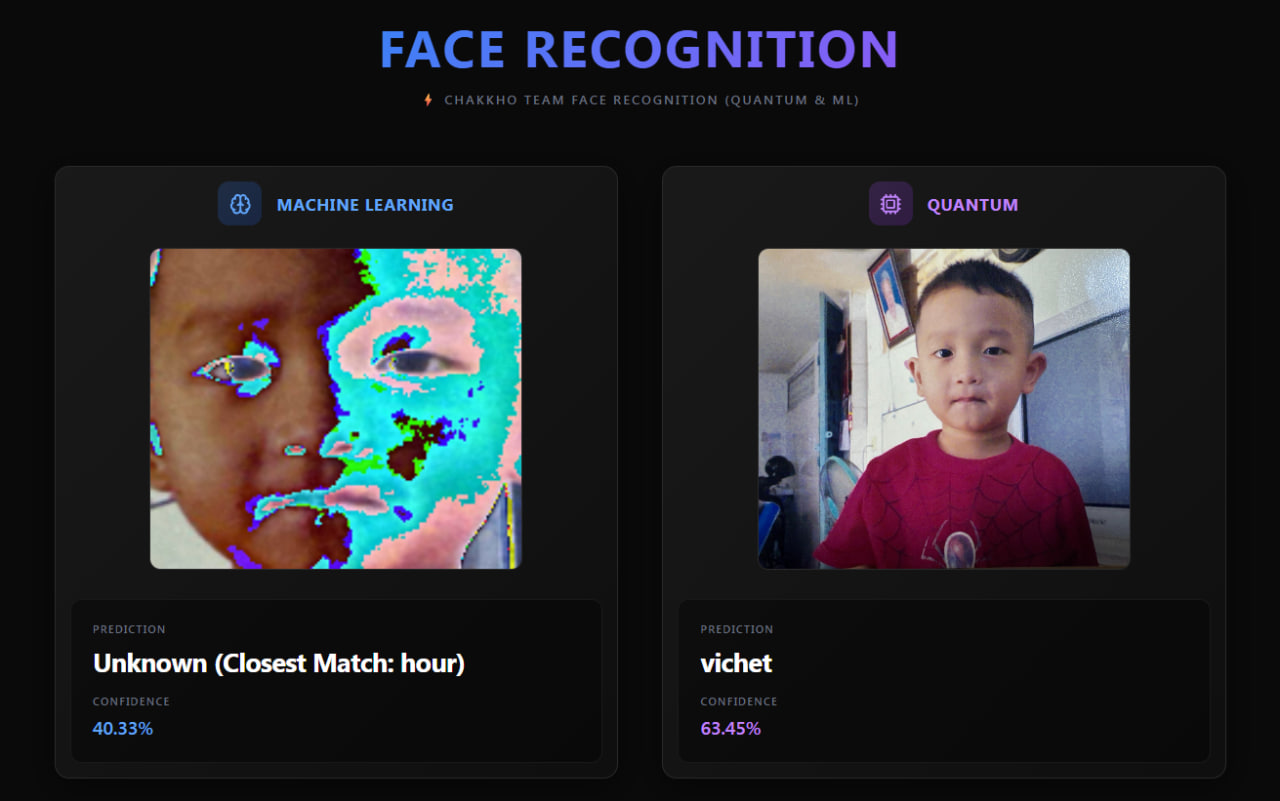
Can quantum computers recognize faces? This project from the Cambodia Academy of Digital Technology (CADT) explores the frontier of biometrics by designing a hybrid quantum-classical architecture that tests the practical limits of quantum machine learning.
The Next Frontier in Biometrics: Quantum Face Recognition
While modern face recognition systems are incredibly popular, classical deep learning methods still struggle with data scalability and processing extremely high-dimensional datasets. To explore a more efficient path forward, researchers at CADT developed a hybrid system that merges traditional computer vision with near-term quantum computing, testing whether quantum mechanics can help map complex facial relationships.
The Hybrid Architecture
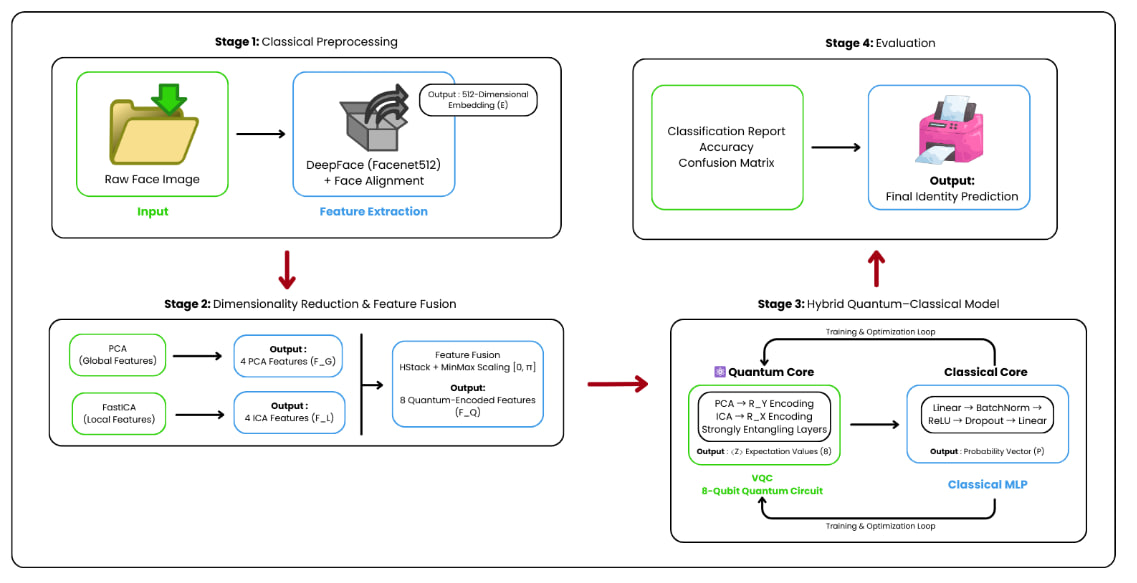
Because current quantum hardware is highly restricted, the team designed a dual-stream pipeline. It begins with classical preprocessing, using DeepFace to extract facial features and compressing them from 512 dimensions down to just 8. These compressed features are then encoded into an 8-qubit Variational Quantum Classifier (VQC) for identification, while a Quantum Swap Test is used to measure similarity and verify user identity.
Classical Speed vs. Quantum Potential
The evaluation revealed a clear performance gap between the two technologies today. The pure classical deep learning baseline model achieved a high accuracy of 99.74%. Under strict hardware constraints, the highly compressed hybrid quantum model achieved a competitive 74.50% accuracy. While classical methods remain faster and more accurate for now, this hybrid model demonstrates that quantum-enhanced representations can successfully preserve essential biometric details even in extremely low-dimensional spaces.